Sunday, September 25, 2005

Playing God... The Nuclear Way!

This Article was written by me and Akshay Raut

“With great power comes great responsibility.” All Spiderman fans are well aware of this statement. This statement is significant when one talks about the nuclear power dynamics of south Asia.

India went nuclear on May 11th, 1998. However, it is popularly believed that India had its first functional tactical fissile device in operational mode since 1976. Pakistan on the other hand, went nuclear in 1998. Since then, the nuclear balance in the subcontinent has been swinging dangerously; primarily due to the lack of any nuclear command and control structure in both the countries. The lack of such strategic control mechanisms gives rise to a potentially volatile, high risk situation in case of any sort of military stand-off between the two countries like the one which happened in December 2001 after Pakistan-backed terrorists stormed the Indian Parliament in New Delhi. Although the use of tactical/strategic nuclear weapons is never even considered in such stand-offs, the preparedness is there. In fact, the preparedness is always there. India has seemed to recognize the problem and there is apparently a nuclear command and control structure is already in place. But this does not solve the problem. There needs to be a well-defined nuclear policy in place, which can be applicable in any sort of scenario. Making public claims of a “no first use policy” does not help.

There is many a lesson to be learnt from the Cold War. Both, the USSR and the USA had stringent measures in place to avoid any accidental firing of missiles, which would trigger off a nuclear war. Spy satellites and radar stations were constantly scanning each other’s missile sites to detect even the minor signs of activity. If there was any “reason to believe” that the other had launched an attack, missiles would be launched immediately to decapitate any second wave of strikes. This mechanism rested on a strong intelligence and communication network. Such networks were specifically designed to cater to the national nuclear command and were completely independent of the other military and civilian networks. The actual order of launching a nuclear strike was at the disposal of the President and his second and third in command. No order could be issued unless everybody concurred, not orally but electronically. So no renegade general or distraught soldier could fire the missile in the country’s name and spark off a chain of mutual annihilation. Although, during the Cold War, America’s nuclear programme was completely and solely aimed at the erstwhile USSR, it matured into a non country-centric system, meaning that it did not aim at any particular country. This happened due to the enormous geographical distance between the two powers.

As opposed to this, India’s programme seems to be wholly and solely aimed at Pakistan or at the most China. This is highly unfavourable in today’s fast changing global political scenario. A foe today could be a friend tomorrow. Hence there is an urgent need on India’s part to make its programme non country-centric. But it has to be done in a less explicit and in a gradual manner. This means that the government should not come out one fine day saying that it has 400 nuclear tipped ICBMs (Inter-Continental Ballistic Missiles) aiming at different parts of the world, as this obviously would seem hostile. There are claims that India sanctioned a programme to develop an ICBM called ‘Surya’ in 1990 and that it might be a variant of ISRO's successful Polar Satellite Launch Vehicle (PSLV). It is alleged that it has a massive range of about 12000 km. If true, then this just about solves India’s problems when it comes to missile-based delivery systems. But India still doesn’t have submarines to launch nuclear missiles from underwater. Silent, mobile, virtually unlimited in range, and with 70% of the world’s surface to prowl in, nuclear-powered ballistic missile submarines (SSBNs) are by far the most powerful launch platforms for nuclear tipped ballistic missiles. Consider this: the massive Soviet/Russian Typhoon-class SSBN is armed with 20 RSM-52 (SS-N-20 "Sturgeon") ballistic missiles with a range of 8,300 km, each carrying up to 10 nuclear warheads. India has been working since 1985 to develop an indigenously constructed nuclear-powered submarine, known as the Advanced Technology Vessel (ATV), one that is based on the Soviet Charlie II-class or Akula II-class design. In January 1988 the Soviets leased a Charlie-I nuclear powered submarine to India, where she served until January 1991 as the “Chakra” and the submarine was manned by a Russian crew training Indian seamen to operate it. Though Indian engineers hoped to reverse-engineer its reactor, the Russians would not let them anywhere near it. Although India has the capability of building the hull and developing or acquiring the necessary sensors, its industry has been stymied by several system integration and fabrication problems in trying to downsize a 190 MW pressurized water reactor (PWR) to fit into the space available within the submarine's hull. Once completed, the ATV will probably be armed with the Sagarika cruise missile (still under development) with a range of 1500-2000 km, or a land attack version of the BrahMos.

If India one day hopes to become a superpower with the ability to project on a global scale, it will have to develop SSBNs and the concomitant nuclear tipped ballistic missiles. Not just that, but it would also need an well-defined nuclear policy capable of dealing with any nuclear scenario, and the political will to carry out nuclear strikes (first strikes, if necessary) to neutralise an enemy before he has the chance to attack. This issue has to be dealt with in a strategically sound manner, because the very existence of the people of this planet is at stake when countries try to play God, the nuclear way.

Friday, August 05, 2005

The Need For An Indo-Japanese Alliance

These days, some people are discussing the feasibility of an Indo-Japanese alliance. Click here for an excellent article by Rajeev Srinivasan on the topic. And here is my take on the whole issue:

China does not want Japan (or India, or any other country) to become politically or militarily powerful. Against Japan, it has a good argument - the rape of Nanjing. It will oppose Japan vigorously if it feels that Japan is getting a bit too "aggressive". The massive protests we saw in front of the Japanese embassy in China were meant to jeopardise Japan's plans of gaining a permanent Security Council seat. We should expect China to oppose us too, since we are a rising power.

An alliance of some sort with Japan will be beneficial for India in many ways:

1) Japan is not a terrorist nation. So the move will not backfire on us like the support for the Taliban did on the US, or the support of the LTTE did for us. It will certainly not isolate us internationally. Moreover, we can do to China what they did to us using Pakistan.

2) The Chinese have a large and seemingly powerful navy (with lots of submarines). I use the word "seemingly" because not much is known about the kind of training they recieve, and their equipment is mostly outdated.
Peoples Liberation Army Navy - Intoduction
Peoples Liberation Army Navy - Ships

On the other hand, the Japanese have one of the most powerful and modern navies in the world. In a war, the Japan Maritime Self Defence Force (JMSDF) will defeat the People's Liberation Army's Navy (PLAN).
Japan Maritime Self Defence Force - Introduction
Japan Maritime Self Defence Force - Ships
Japan Self Defence Force PR video. Highly recommended. From Bharat Rakshak

The Indian Navy (IN) is not very well equipped and may not survive a concerted PLAN campaign. The delays in new acquisitions are adversely affecting its fighting ability. While The IN leads the PLAN when it comes to electronics, command and control, training, tactics, etc, the sheer numbers of PLAN warships will most likely overwhelm the Indian Navy in the near future.
Indian Navy - Introduction
Indian Navy - Ships

Thus, the JMSDF will be a powerful friend to have in times of a crisis. It may not need to fight the PLAN, just tying down enough PLAN resources will do.

3) The Japanese Army however, is quite small, and its ability to fight its Chinese and North Korean counterparts, especially if they use human-wave attacks is very limited. In such a scenario, the Indian Army, which is very well trained, well equipped with the latest Israeli, Russian, Indian, and American (to a small extent) equipment, and very high on morale, will be a perfect foil for China’s bloated People’s Liberation Army (PLA). Once again, it does not actually need to fight the PLA – mobilisation on the eastern border to tie down most Chinese troops will do. The PLA is certainly not interested in fighting the IA, which is a very different force from what it was in 1962.
People’s Liberation Army
Indian Army
Japan Ground Self Defence Force

4) As far as Air Forces are concerned, the (PLAAF) is very large, but notoriously ill-trained and works with obsolete equipment. The Indian Air Force (IAF), on the other hand is very well trained (as is evident from the results of the Indo-US Cope-India 2004 exercise) and has a lot of high technology equipment at its disposal (though most of the workhorse MiG-21s are in dire need of upgrades). How the IAF and PLAAF would perform against each other is hard to tell. However, if the Japan Air Self Defence Force (JASDF) and IAF launch an attack on China on two fronts, the PLAAF will not be able to cope.
People's Liberation Army Air Force
Indian Air Force
Japan Air Self Defence Force

5) Japan is the second largest economy in the world, and is industrial capabilities are one of the most advanced in the world.
List of countries by GDP (nominal)
An alliance with Japan will undoubtedly strengthen India’s industrial capabilities, especially our manufacturing sector.

Thus, an Indian alliance with Japan will hugely benefit the two countries militarily, and economically, and check China’s rising power in the region.

Thursday, June 30, 2005

I Found This In My Mail

Lt. Saurabh Kalia of 4 JAT Regiment of the Indian Army laid down his life at the young age of 22 for the nation while guarding the frontiers at Kargil. His parents, indeed the Indian Army and nation itself, lost a dedicated, honest and brave son. He was the first officer to detect and inform about Pakistani intrusion. Pakistan captured him and his patrol party of 5 brave men alive on May 15, 1999 from the Indian side of LOC. They were kept in captivity for three weeks and subjected to unprecedented brutal torture, evident from their bodies handed over by Pakistan Army on June 9, 1999. The Pakistanis indulged in dastardly acts of inflicting burns on the Indians with cigarettes, piercing their ears with hot rods, removing their eyes before puncturing them and breaking most of the bones and teeth. They even chopped off various limbs and private organs of the Indian soldiers besides inflicting unimaginable physical and mental torture.

After 22 days of torture, the brave soldiers were ultimately shot dead. A detailed post- mortem report is with the Indian Army. Pakistan dared to humiliate India this way flouting all international norms. They proved the extent to which they can degrade humanity. However, the Indian soldiers did not break while undergoing all this unimaginable barbarism, which speaks volumes of their patriotism, grit, determination, tenacity and valour - something all of India should be proud of. Sacrificing oneself for the nation is an honour every soldier would be proud of, but no parent, army or nation can accept what happened to these brave sons of India.

I am afraid every parent may think twice to send their child in the armed forces if we all fall short of our duty in safeguarding the prisoners of war and let them meet the fate of Lt. Saurabh Kalia. It may also send a demoralising signal to the army personnel fighting for the Nation that our POWs in Pak cannot be taken care of. It is a matter of shame and disgust that most of Indian Human Rights Organisations by and large, showed apathy in this matter.

Through this humble submission, may I appeal to all the civilized people irrespective of colour, caste, region, religion and political lineage to stir their conscience and rise to take this as a national issue?

International Human Rights Organisations must be approached to expose and pressure Pakistan to identify, book and punish all those who perpetrated this heinous crime to our men in uniform. If Pakistan is allowed to go unpunished in this case, we can imagine the consequences.

Below is the list of 5 other soldiers who preferred to die for the country rather than open their mouths in front of enemy.

1. Sep. Arjun Ram s/o Sh. Chokka Ram; Village & PO Gudi. Teh. & Dist.Nagaur (Rajasthan)

2. Sep. Bhanwar Lal Bagaria h/o Smt. Santosh Devi;Village Sivelara; Teh. & Dist. Sikar (Rajasthan)

3. Sep. Bhikaram h/o Smt. Bhawri Devi; Village Patasar;Teh. Pachpatva; Distt. Barmer (Rajasthan)

4. Sep. Moola Ram h/o Smt. Rameshwari Devi; Village Katori; Teh. Jayal; Dist. Nagaur (Rajasthan)

5. Sep. Naresh Singh h/o Smt. Kalpana Devi; Village Chhoti Tallam; Teh.Iglab; Dist.Aligarh (UP)

Yours truly,

Dr. N.K. Kalia (Lt. Saurabh Kalia's father).
Saurabh Nagar,
Palampur-176061
Himachal Pradesh
Tel: +91 (01894) 32065

My two paise:

1) The soldiers were tortured because they chose to fight - and die - for their country. Why the hell were the Pakis allowed to get away with this? Was it not the government’s duty to avenge them? Why were our politicians working so hard to avoid a full-scale war?

2) Whether the soldiers broke under torture or not is something we will never know, but it really does not matter. The mere fact that they were subjected to this kind of treatment justified a tougher line against Pakistan.

3) What the hell was Arundhati Roy doing when this happened? I did not hear a peep out of this great “Champion of Human Rights” who “as a world citizen, implored the Vajpayee government to give up nuclear weapons”. Where were all the other human rights organisations that suddenly became very vocal during the Babri Masjid incident and the Gujarat riots? (I am not condoning these incidents in any way. What happened then was wrong, no doubt). Where were Teesta Setalvad and her slimy chums? Were they just too flush with funds obtained from questionable sources to speak out? Fuckin’ pseudos - the lot. Deserve to be lined up and shot.

4) Should we bring international human rights organisations into this? In my opinion, they are a bunch of self serving bastards as bad as the home-grown variety. When they are not being used as political tools by their own governments, that is…

5) Why do we continue to vote such weak-kneed governments into power? For them, such an incident is just another opportunity to let us down (Tashkent, Simla, IC-814, Pyridhwah, the list just goes on and on).

6) Why am I so angry with this when I know that there is nothing I (Or anyone else, for that matter) can do about it? Such incidents will keep on happening and we will just “turn the other cheek”.

I wanna know what you people think. Please reply...

Saturday, May 14, 2005

Punish Bangladesh

The Bangladesh Rifles’ torture and killing of a senior BSF officer was absolutely reprehensible. However, the response of the Government of India, which only “lodged a strong protest” with Dhaka, was appalling to say the least. Even in 2001, when Bangladesh Rifles (BDR) soldiers killed 16 BSF jawans in Pyridwah village in Meghalaya, the incident was met with the same weak-kneed response that has come to characterise the reactions of successive Indian Governments to such killings. It is a crying shame that India, a country that calls itself a “regional power” and a “future economic giant” continues to be held hostage by a non-entity like Bangladesh, which has a weak economy (totally depandent on the Indian economy), a tiny military (surrounded on three sides by India on land, and facing a powerful Indian Navy on the fourth), and no international support to speak of (Pakistan? Puh-leeez!). Maybe a more fitting response is in order here – economic sanctions, or even a limited-intensity military attack to neutralise BDR positions inside Bangladesh – a response that will send out a clear message, "Pull off another stunt like this and we will destroy you". I'm sure a tight jhapad will show 'em who is boss.

Sould India Buy F/A-18s and F-16s from the US?

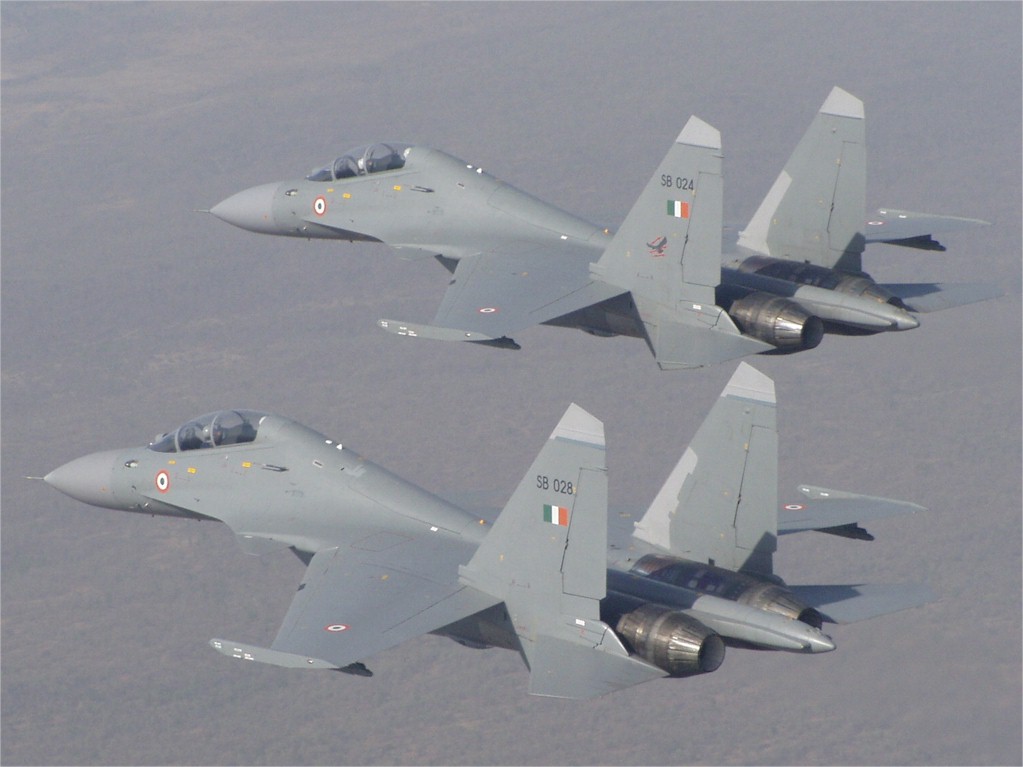
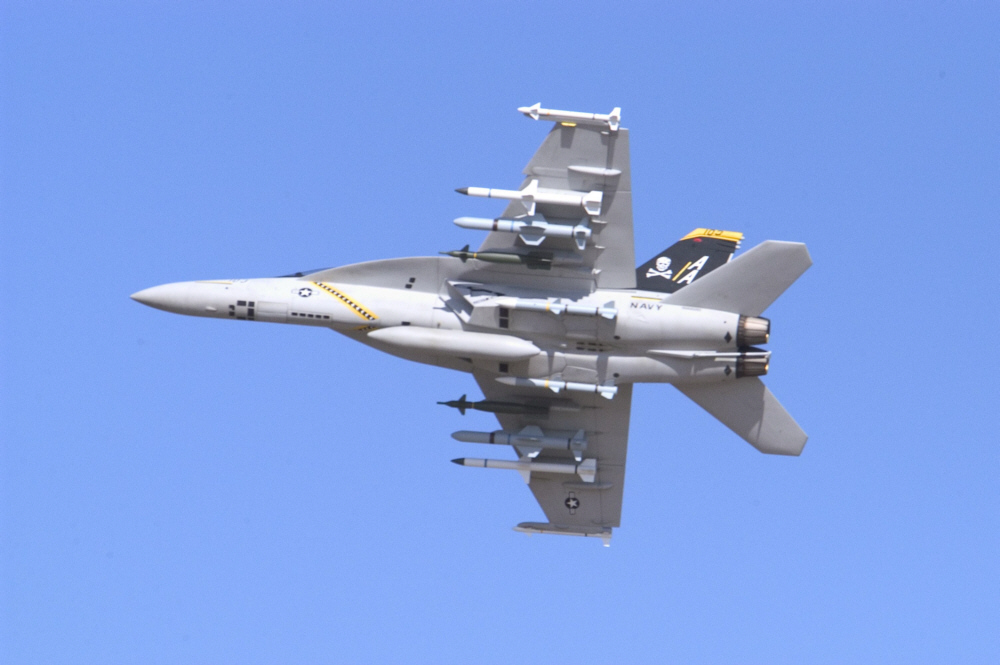
Ever since the US agreed to sell F-16 fighter aircraft to Pakistan, there has been a spate of reports in the media about the alleged proposal by the US to sell the more advanced Boeing F/A-18 E/F "Super Hornet" (left) fighter aircraft to India. However, the deal is not likely to materialise (and shouldn't be allowed to either), for several reasons. Firstly, the F/A-18 E/F and the Russian Su-30MKI share roughly the same mission profile that includes air superiority, close and deep air support, and day and night strike missions, to name a few. Deploying two similar aircraft to carry out similar missions would serve no useful purpose for obvious reasons and prove to be a logistical nightmare for the Air Force.

Secondly, The Su-30MKI (left) is far superior to the F/A-18 E/F when it comes to combat capability, on account of its ability to carry far greater payload as compared to the F/A-18 E/F, a normal operating range of more than 3000 km (and a maximum of 5200 km), as opposed to about 390 km for the F/A-18 E/F, an extremely powerful radar, and thrust vectoring engines which give it class-leading manoeuvrability no western aircraft can match. All these features, combined with a superb mix of Russian, Israeli, and Indian avionics make the Su-30MKI one of the finest fighter aircraft in the world, if not the very best. In fact, the Su-30MKI is so advanced, that not even the Russians (let alone the Chinese) have anything in their inventory which can match it. It is closer in performance to the Su-37 and Su-35, rather than to Russian or Chinese Su-30s. Moreover, at $30 million apiece, the Indian manufactured version of the Su-30MKI comes relatively cheap, costing almost half as much as the F/A-18 E/F, which is priced at $57 million.
Finally, the United States’ poor track record as a reliable arms supplier is probably the most important reason not to buy the F/A-18s. The sale of these aircraft as well as the unhindered supply of spares is dependent on the whims of US Congressmen and Senators. India should learn from the Pakistani experience in this regard. During the Afghan war, the Reagan administration decided to sell about 80 F-16 Fighting Falcons to Pakistan. However, due to Pakistan’s nuclear proliferation activities, the sale was suspended after 40 aircraft were delivered, even though all 80 had been paid for, under the Pressler amendment. Pakistan had to struggle to even claim this money back. While this move served Indian interests well, it was not exactly an advertisement of American reliability. Make no mistake; if they could do this to Pakistan, they can do it to India. However no such problems exist as far as Russian arms are concerned. Even the French have laid to rest all doubts as far as reliability issues go. Their support for India’s nuclear tests in 1998 (France and Russia were the only countries which supported us) was ample proof of this.

U.S. Arms Sales to Pakistan: How Much Should India Worry?

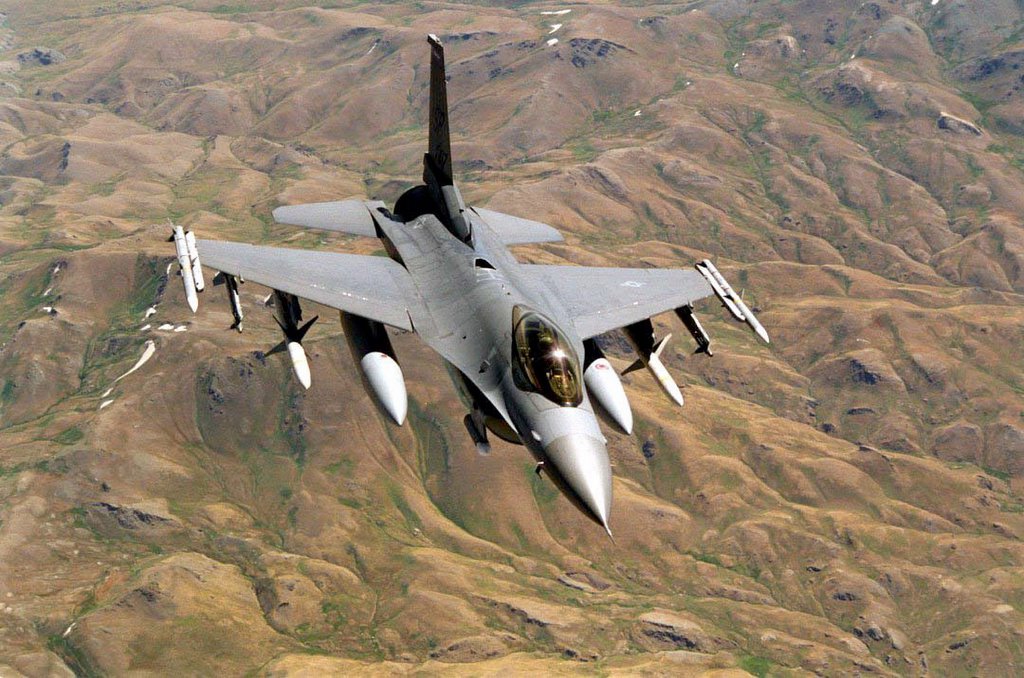
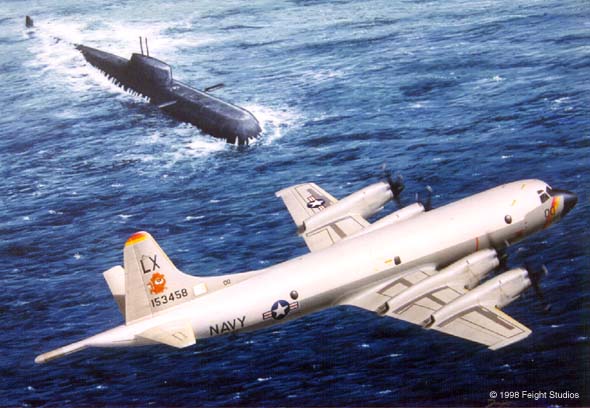
In the last few months, there has been a spate of reports in the media about Pakistan acquiring advanced arms from the USA. These include the Lockheed F-16 “Fighting Falcon” multi-role fighters, the Lockheed P-3C “Orion” long-range anti-submarine warfare (ASW) and maritime patrol aircraft, TOW anti-tank missiles, and Mk-15 “Phalanx” Close-In Weapon Systems, which are anti-missile guns mounted on ships. I will make an attempt to explain these weapon systems and their effectiveness in an India-Pakistan war.


Most of the media attention has undoubtedly been focused on the F-16s, and the Indian government’s strident opposition to their sale has got more to do with bringing Indian influence on Pakistan’s move to acquire any arms than with any tactical disadvantage the Indian Air Force (IAF) might face due to these aircraft. The effectiveness of this move is evident from the fact that Belgium recently refused to sell its old F-16s to Pakistan, stating that such a sale would jeopardise the ongoing peace process with India. Even though the Bush Administration has now agreed to sell these aircraft to Pakistan, the final sale of the aircraft depends on the approval of the Congress, a procedure likely to take at least two years. Thus, for the time being, it looks as if Pakistan is not getting a single F-16. Even if the Pakistan Air Force (PAF) receives some F-16s, the aircraft, though potent, will be no match for the IAF’s MiG-29 and Su-30MKI fighters. As of now, the PAF does not have any Beyond Visual Range (BVR) missiles equipping the F-16s, which are the old block A and B type, while the IAF’s MiG-21s, MiG-29s, Mirage-2000s, and Su-30MKIs are bristling with them.


Next in line is the Lockheed P-3C “Orion”. While the Orion is an excellent anti-submarine and anti-ship platform, it will be useless unless provided with air cover by the PAF. The PAF is not very big, nor on the cutting edge of technology, and will most likely have its hands too full combating the IAF to provide air cover to the Orions. Moreover, Pakistani naval aviation does not have dedicated fighter/interceptor aircraft in its inventory, as opposed to the Indian naval aviation, which has land-based Jaguars and Su-30MKIs along with carrier-based aircraft like Sea Harriers from the INS Viraat and shortly arriving MiG-29Ks from the Gorshkov (INS Vikramaditya), all of which have BVR capability (The Harriers are being upgraded to carry BVR missiles). These aircraft, coupled with airborne early warning aircraft like the Ka-31 helicopters (9 are already in service) and the Israeli Phalcon (3 have been ordered for the IAF), make the Indian naval aviation a potent force, rendering the lumbering Orions little more than sitting ducks. How the Indian Navy would cope with coordinated saturation attacks from many directions (for example by dozens of Mirage fighters armed with medium range Exocet anti-ship missiles, three to four Orions armed with long range Harpoon anti-ship missiles and anything else that could be thrown in to the arena) would be a matter of clever tactics and a battle of wits.

The third system is the M-220 Tube Launched, Optically Tracked, Wire Guided (TOW) Missile. It is primarily used in antitank warfare, and is a line of sight, wire-guided weapon. Current versions are capable of penetrating more than 30 inches of armour, or “any 1990s tank”, at a maximum range of more than 3,000 meters. Infantrymen using a tripod, as well from vehicles and helicopters, can fire it. It’s combat record, starting from Vietnam and continuing beyond the Gulf Wars shows it to be an overwhelming success. It was hardly influenced by the advanced counter-measures the Iraqi Army tried deploying against it. 2000 of these missiles in the hands of Pakistani soldiers will pose a grave threat to Indian armoured columns deployed in the deserts of Rajasthan and Gujarat and the plains of Punjab. Though India possesses an equally successful system, the European “Milan”, Pakistan’s acquisition of the TOW is a genuine cause of worry for the Indian Army. With hardly any Indian opposition to its sale, the deal looks likely to fall through, and many Indian tanks might fall prey to Pakistani TOWs in the event of a war.

The last item on the list is the Mk-15 “Phalanx” Close-In Weapon System (CIWS). This a fast-reaction, rapid-fire gun system that provides Navy ships with a terminal defence against anti-ship missiles that have penetrated other fleet defences. The radar guided 7-barrell-gun fires 20mm ammunition at either 3,000 or 4,500 rounds-per-minute with a burst length of continuous, 60, or 100 rounds. However, the Phalanx alone is not enough to defend a ship against a barrage of anti-ship missiles. Only those few missiles, which have penetrated outer fleet defences like carrier-based aircraft and short to medium range missiles, can be stopped by the Phalanx. Since Pakistan possesses no carrier-based aircraft, which is the outermost (and probably the most important) ring of such defences, their Navy ships will face a constant threat from Indian anti-ship missiles. Moreover, the ability of the Phalanx to handle missiles like the BrahMos, which fly at high supersonic speeds of more than Mach-3, is suspect.

Thus, though America’s recent sale of advanced weapon systems to Pakistan is a cause of worry for India, the situation is not as bad as it has been made out to be. The ability of these weapons to help Pakistani forces gain decisive tactical advantage in a battlefield is hindered by the superior technology and numbers of Indian weapons as well as the rigorous training the Indian armed forces receive. However, wars have a habit of throwing up some very unpleasant surprises and ultimately it will be our ability to cope with them that will decide the outcome of any future conflict.